
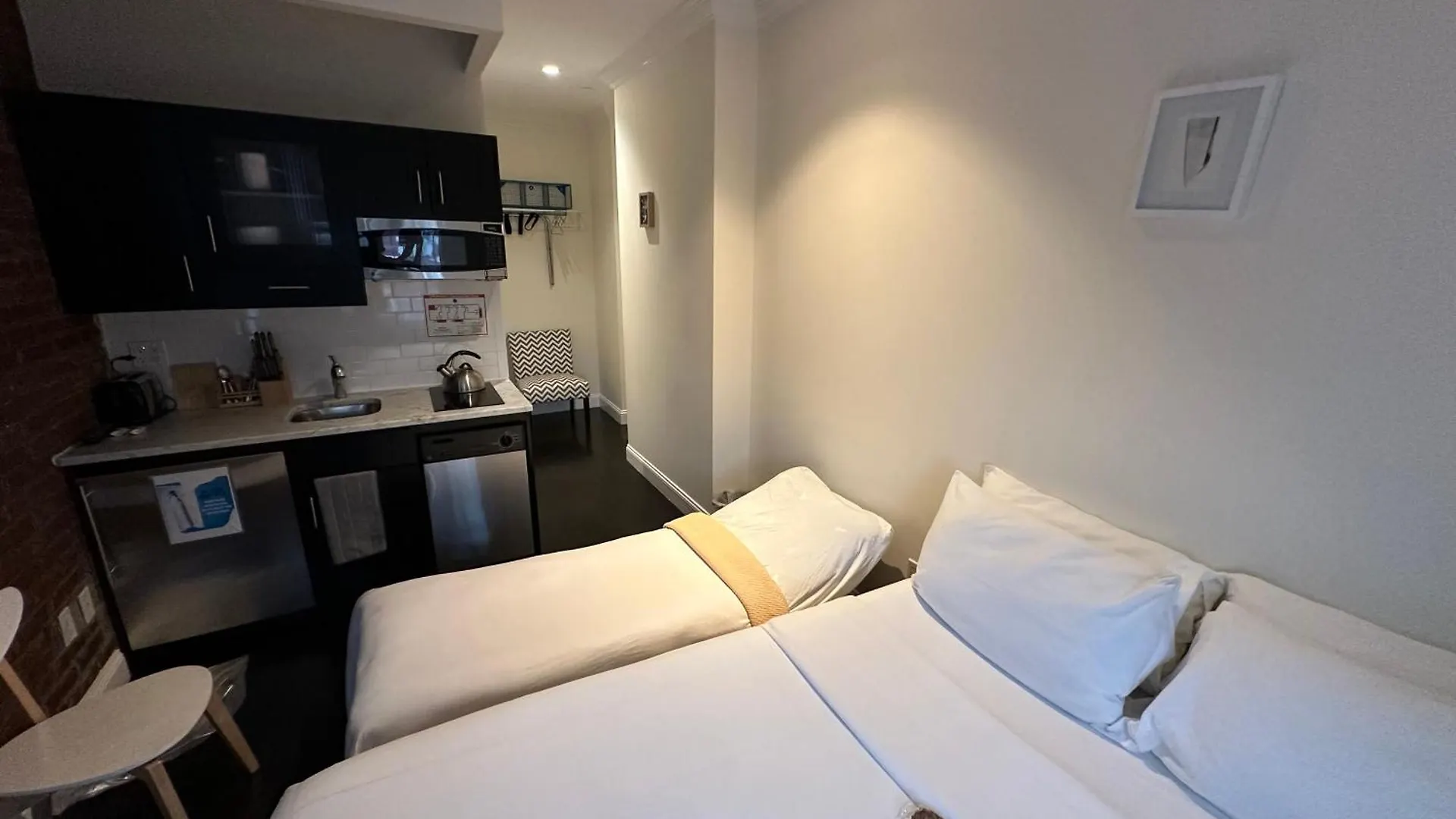
East Village sits at the center of downtown Manhattan's most textured street life - think independent restaurants on St. Marks Place, live music venues on the Bowery, and a neighborhood that shifts from quiet residential blocks to packed bar strips within a single avenue. Boutique hotels here are embedded in that energy rather than insulated from it, which makes the choice of property matter more than it would in a generic midtown corridor. This guide covers 4 boutique hotels in East Village with the concrete details you need to book with confidence.
What It's Like Staying in East Village
Staying in East Village means waking up in one of Manhattan's most walkable and culturally dense neighborhoods, where nearly everything - coffee, food, nightlife, and transit - sits within a few blocks. The 6 train at Astor Place gives you a reliable spine into midtown and downtown without needing taxis, but the neighborhood's street rhythm is loud at night, especially on weekends around the bar clusters on Avenue A and 2nd Avenue. This is a neighborhood that rewards guests who want to be inside the city's texture, not just near it.
Pros:
- Dense concentration of independent restaurants and bars within walking distance, reducing transport costs significantly
- Direct subway access via Astor Place (6 train) and Bleecker Street (4/5/6) puts Midtown around 15 minutes away
- Strong pedestrian connectivity to Lower East Side, Greenwich Village, and SoHo without needing transit
Cons:
- Street noise on weekend nights is consistent and can be disruptive for light sleepers on lower floors
- No major tourist landmarks within the neighborhood itself - cultural draws require a short commute
- Limited green space; Tompkins Square Park is the only significant outdoor relief in the immediate area
Why Choose a Boutique Hotel in East Village
Boutique hotels in East Village typically occupy converted townhouses or low-rise residential buildings, which means rooms tend to be more compact than midtown equivalents - but the design quality and neighborhood immersion make the trade-off worthwhile for most guests. Rates at boutique properties here can run around 20% lower than comparable boutique stays in SoHo or the Meatpacking District, largely because East Village lacks the designer retail premium of those zones. What you gain instead is proximity to the city's most authentic bar and dining scene, with hotels that genuinely reflect the neighborhood's industrial-residential aesthetic rather than imposing a generic luxury template over it.
Pros:
- Design-led interiors that reference the neighborhood's loft and industrial heritage rather than generic hotel aesthetics
- Smaller property scale means more personalized service and faster check-in compared to large midtown towers
- On-site dining options at several properties are genuine neighborhood restaurants, not just hotel amenities
Cons:
- Walk-up buildings are common in this area - no elevator access is a real possibility and critical to check before booking
- Room sizes are typically smaller than midtown boutique equivalents at a similar price point
- Parking is extremely limited; properties with private parking are rare and worth noting when comparing options
Practical Booking & Area Strategy
For the best street positioning in East Village, properties near or just off Cooper Square and the Bowery corridor offer the strongest transit-to-neighborhood balance - Astor Place station is a 4-minute walk from that stretch, connecting directly to the 6 line toward Grand Central and beyond. Hotels on or near Rivington Street sit closer to the Lower East Side boundary, which adds nightlife density but increases noise exposure. East Village peaks in occupancy during September and October when NYU's academic calendar restarts and the fall festival circuit begins, so booking at least 6 weeks ahead for those months is a practical baseline. Tompkins Square Park, the New Museum, and the Bowery Ballroom are the neighborhood's main cultural anchors - all reachable on foot from any property in this guide.
Best Value Stays
These properties deliver strong location value and practical amenities at a lower entry price, making them the logical starting point for guests prioritizing budget control without sacrificing the East Village address.
-
1. East Village Hotel
Show on map


 Check-infrom 15:00 until 23:59Check-outuntil 11:00
Just a few rooms left at the best rate!
fromUS$ 298
-
2. Hotel On Rivington
Show on map


 Check-infrom 16:00 until 23:59Check-outuntil 11:00
Just a few rooms left at the best rate!
fromUS$ 215
Best Premium Stays
These two properties stand at the top of the East Village boutique tier, offering design-forward rooms, on-site dining, and service infrastructure that justifies the higher rate for guests who want more than a functional base.
-
3. The Standard - East Village
Show on map


 Check-infrom 15:00 until 23:59Check-outuntil 12:00
Hurry – almost gone at this price!
fromUS$ 393
-
4. The Bowery Hotel
Show on map


 Check-infrom 15:00 until 23:59Check-outuntil 12:00
Rooms filling fast – secure the best rate!
fromUS$ 395
Smart Travel & Timing Advice for East Village
East Village sees its busiest stretches in late September through early November, when NYU's fall semester is in full swing, the New York Film Festival draws visitors downtown, and the general drop in summer humidity brings more foot traffic back to the streets. Booking at least 6 weeks ahead during that window is advisable for boutique properties, which have smaller room inventories than midtown towers and fill faster under demand pressure. January through early March is the clearest window for lower rates and quieter streets - the neighborhood doesn't empty out the way beach destinations do, but weeknight noise levels drop noticeably and some bars reduce their hours. A 3-night stay is the practical minimum to absorb the neighborhood properly; shorter stays don't leave enough time to work through the restaurant density on the immediate blocks, which is one of the main reasons to stay here over a midtown alternative. Last-minute booking is risky for the premium properties in this guide but occasionally viable for the studio-format East Village Hotel, which targets longer-stay guests and may have more flexible availability outside peak periods.


